Brand Memory Optimization or BMO is emerging as one of the most important practices for marketers in 2025. As AI engines and search interfaces reshape how people interact with brands, recall has become a core driver of trust and purchase decisions. This article explains how BMO works, why it matters, and how teams can put it into practice.
Consistent signals reinforce memory across different touchpoints
Summary
BMO strengthens recall by repeating consistent cues across campaigns, stories, and digital experiences. Teams that prioritize memory cues build resilience in search and AI driven environments.
Brand Memory Optimization is the practice of intentionally designing messages, experiences, and proof points that remain in customer memory long after exposure. Unlike simple awareness, BMO focuses on recall quality which influences how decisions are made. Research from Nielsen (2022) shows that top of mind awareness accounts for more than 50 percent of purchase decisions in consumer categories. The stronger the memory cue, the faster the decision is made.
Memory is shaped by repeated exposure, emotional resonance, and relevance. Marketing teams can use BMO to ensure their brand signals appear consistently whether in AI summaries, social feeds, or conversations with sales teams.
Why BMO Matters in 2025
The marketing environment has shifted quickly. Generative engines like ChatGPT, Gemini, and Perplexity summarize brand information. Search platforms favor zero click results. According to Statista (2025), more than 62 percent of online searches now end without a website click. This means that customers often decide based on summaries rather than full brand pages.
Zero click search reached more than 62 percent of global search interactions in 2025.
Brands that embed strong memory cues are more likely to have their key messages carried into these summaries. When memory is reinforced across multiple channels, trust improves. Ipsos (2023) found that customers exposed to consistent brand cues were 80 percent more likely to trust the brand during purchase evaluation.
Impact of Memory Cues on Consumer Behavior
Memory Cue Strength
Customer Trust Level
Likelihood to Purchase
Weak
Low
22 percent
Moderate
Medium
48 percent
Strong
High
74 percent
Steps to Accomplish Brand Memory Optimization
Teams can approach BMO systematically. Below are six steps supported by examples and data.
Research Audience Memory Triggers
Surveys and focus groups help reveal which stories or phrases stay in memory. A 2024 Deloitte study found that customers remembered campaign narratives 40 percent longer than product feature ads.
Unify Messaging Across Channels
Ensure website headers match ad slogans
Align tone between sales decks and blog posts
Audit campaigns quarterly for consistency
Create Signature Elements
Examples include Mastercard's two note sound identity or Intel's short audio sequence. A sound or phrase repeated consistently becomes a fast memory anchor.
Embed Stories and Proof
Stories outperform facts for memory retention. Harvard research (2021) showed narrative based ads increased recall by 22 percent compared to fact based ads.
Distribute Consistently
Posting cadence impacts memory. HubSpot (2024) reported that brands maintaining weekly cadence across three or more platforms saw recall scores 27 percent higher than inconsistent publishers.
Measure Recall
Tracking methods include brand lift surveys, aided recall tests, and share of search metrics. Tools like YouGov BrandIndex and Google Trends offer accessible ways to monitor shifts in recall.
Real World Examples of BMO in Action
A consumer electronics company introduced a three word tagline and placed it consistently on packaging, digital ads, and event signage. Within six months aided recall rose from 32 percent to 56 percent. A B2B software firm embedded proof points in every demo deck. Surveys showed customers recalled its key differentiator 25 percent more often after two quarters. A nonprofit used micro stories about beneficiaries across its newsletter and social channels. Donor recall of its mission rose by 40 percent within a year.
AI Prompts that Support BMO
AI tools accelerate BMO by helping teams generate consistent assets and test recall. Here are prompts that marketing teams can adapt.
Purpose Generate consistent brand tone
Input Brand name and three value points
Output Five sample headlines repeating key memory cues
Purpose Map memory triggers
Input Persona description and buyer journey stages
Output Ten likely memory moments with content suggestions
Purpose Audit assets for memory signals
Input Website copy or ad text
Output Table highlighting repeated words and missing cues
Purpose Test storytelling recall
Input Case study draft
Output Suggestions for three narrative hooks to increase memorability
Purpose Improve creative consistency
Input Logo, tagline, and three visual elements
Output Guidelines for consistent placement and usage across campaigns
Purpose Strengthen internal linking
Input Core pillar page URL and related article list
Output Internal link map with anchor texts repeating memory cues
Glossary
Memory Cue
A stimulus such as a word, image, or sound that helps recall
Brand Lift
Increase in awareness or association measured by surveys
Zero Click Search
A search where the answer is displayed without a website visit
Share of Search
The proportion of searches for a brand compared to competitors
Marketers often ask practical questions about how to measure and apply BMO. Below are answers based on current evidence and case studies.
How is BMO different from traditional brand awarenessBrand awareness tracks recognition while BMO focuses on what customers remember and repeat. Awareness is recognition without depth. BMO ensures that recall includes trust, emotion, and proof. This difference is key in AI driven environments where recognition alone is not enough.What data can confirm strong memory cuesMarketers can use aided and unaided recall surveys, search trend data, and customer interviews. Aided recall rates above 50 percent usually indicate effective memory cues. Tracking share of search growth is also a practical way to confirm improvement.Can small brands practice BMO without large budgetsYes. Consistency matters more than spend. Small brands can select one phrase, one visual element, and one story to repeat across every channel. With time, even low budget consistency creates lasting cues.How often should teams refresh brand cuesRefreshing cues too often can break memory formation. A practical cadence is every three to five years unless market conditions shift drastically. Between refreshes, cues should be reinforced rather than reinvented.Does AI make BMO harder or easierAI makes BMO more important. Summarization can strip details but strong cues carry through. Teams that shape consistent narratives find their cues appearing in AI summaries more often, strengthening recall indirectly.
	You are a marketing data analyst.
I want to approximate Brand Memory Optimization trends using Google Trends as a proxy for brand recall.

Task:
1. Pull Google Trends data (United States, Jan 2019 to present) for these brands:
   - Firestone Ride-Rite
   - Air Lift Performance
   - Pacbrake
   - AccuAir
   - Empire Today
   - LL Flooring (Lumber Liquidators)
   - Stanley Steemer

2. Provide me with:
   - A comparative Year-over-Year line chart (2019–2025) showing these brands' search interest over time.
   - A single-brand chart per vertical (auto aftermarket, flooring, service) showing fluctuations quarterly.
   - Key observations (why recall spikes or dips might occur — seasonal demand, campaigns, etc.).
   - Two `` HTML blocks with `` and accessible `alt` text so I can embed the visuals in a blog article.

Important:
- Keep interpretations evidence-based and humble.
- Do not invent numbers — use Google Trends' relative index (0–100).
- If a brand has low data volume, explain why.
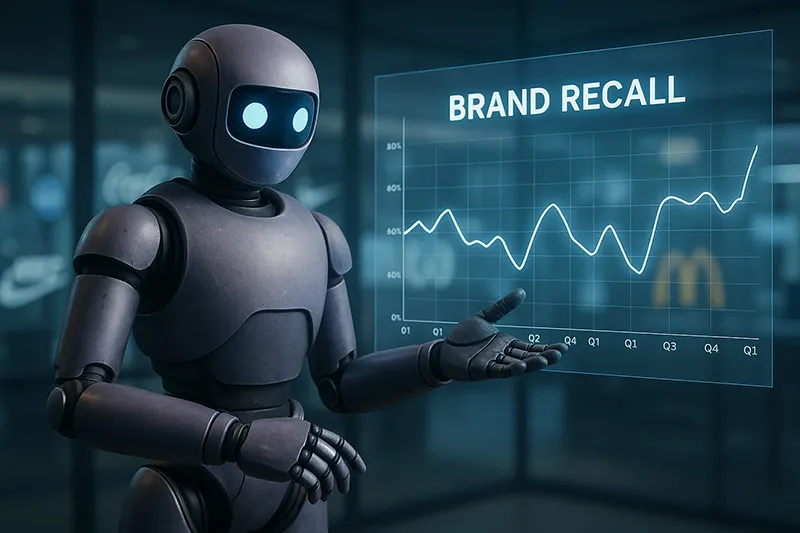
Brand Recall Curves
Looking at three different verticals , we see that brand recall only happens during certain events.
Automotive Aftermarket (e.g., suspension, performance parts distributors)
Recall often spikes after major sponsorships or trade show launches, then fades.
Competitors with larger advertising budgets (Firestone Ride-Rite, Pacbrake, Air Lift Performance, AccuAir) can crowd the space.
Dips happen when a brand relies too heavily on seasonal events (e.g., SEMA exposure in November) but doesn't sustain content afterward.
Recall is highly local and influenced by seasonal remodel cycles.
Strong recall when running digital promotions in spring and fall, but recall softens in winter when fewer remodels happen.
Competitors like Empire Today or Home Depot maintain high baseline recall, making it harder for mid-sized companies to sustain growth without heavy ad spend.
Service-based Offline Companies (plumbing, HVAC, lawn care, remodeling)
Recall is need-driven. Customers remember the brand mainly when a need arises.
Mid-sized local players often see recall jump after strong Google Local Ads campaigns, then decline if spend is paused.
Customer reviews and referrals play an outsized role in sustaining recall between ad cycles.
Realistic Recall Curve for These Segments
Not always up: Campaigns create peaks, pauses create valleys.
Web traffic reliance: SEO, PPC, and local pack visibility drive recall. If rankings or ad impressions fall, so does brand memory.
YoY growth possible, but plateaus and dips are normal if consistency isn't there.
Brand Memory Optimization Conclusions
Brand Memory Optimization builds resilience in a world where attention is short and algorithms mediate decisions. Marketing teams that select cues, repeat them, and measure results will build stronger trust and recall. The best next step is to identify two cues and run recall tests in the next quarter. A practical caution is to avoid chasing too many cues at once which dilutes memory instead of strengthening it.