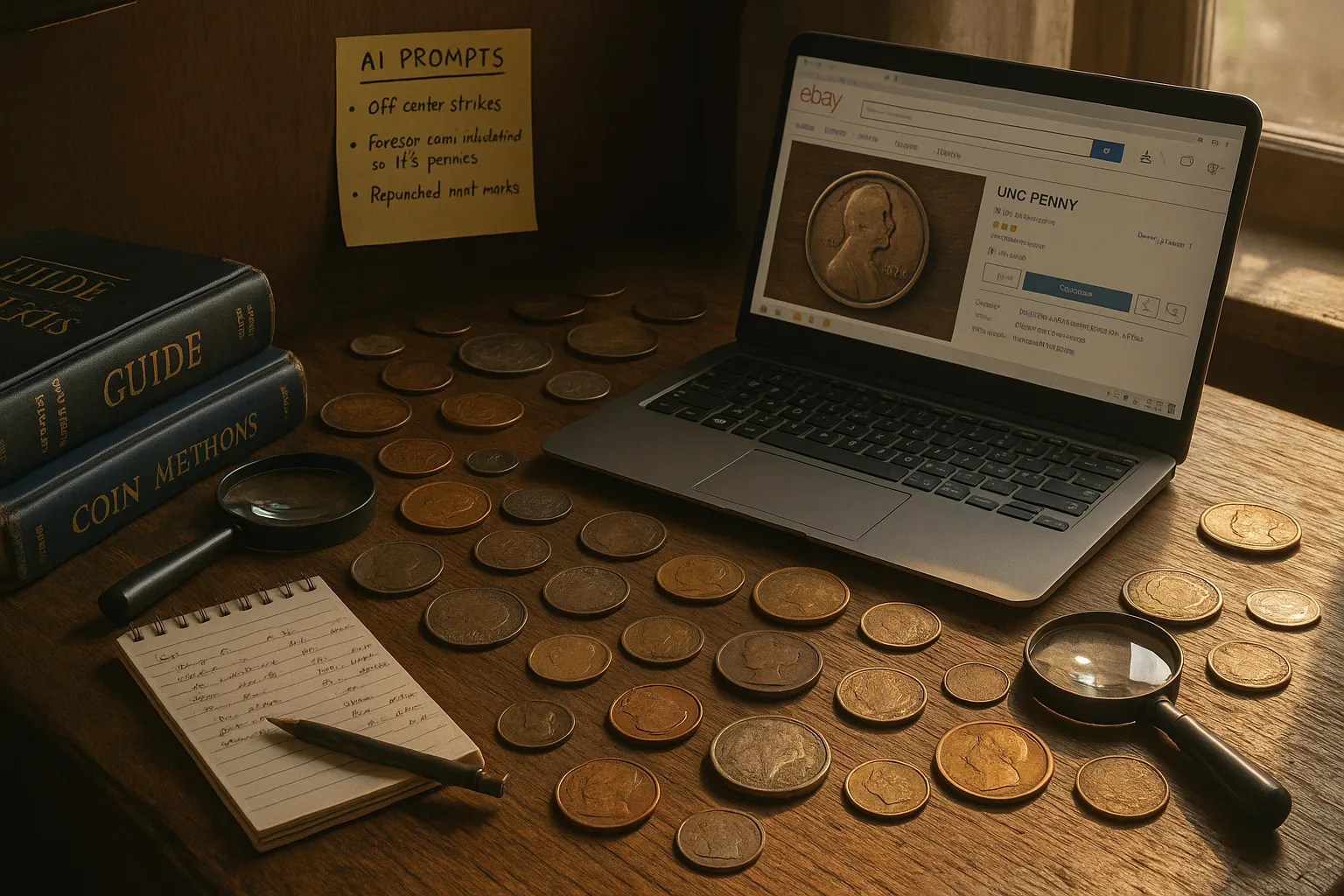
Unlocking Hidden Wealth in Untapped Coin Niches
Forget the key dates. The smartest profits often come from the coins no one's paying attention to mint errors, condition rarities, and mislisted gems. This article reveals exactly how to find them using AI-powered research prompts.
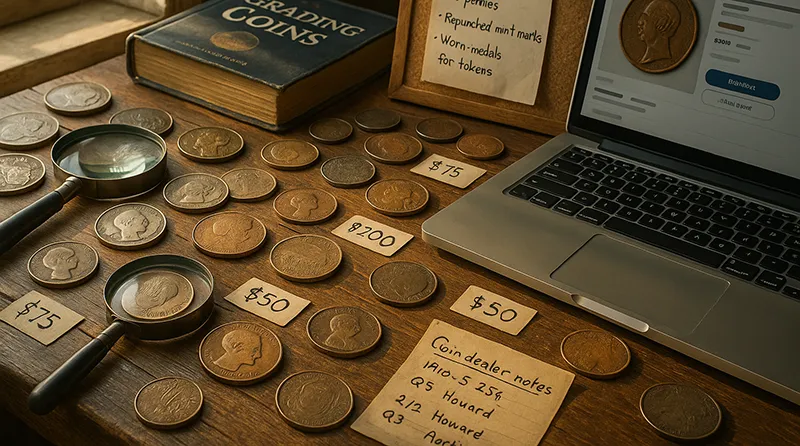
What Makes a Coin "Untapped"?
Untapped value in coins usually stems from market inefficiency. It's not about rarity alone it's about overlooked potential. Some coins are consistently undervalued because:
- They're mislisted with poor titles or wrong categories
- They're common in circulated condition but rare in high grades
- The seller doesn't recognize an error or variety
- The coin isn't well known or talked about in collector circles
These coins often live in junk lots, foreign bundles, or low-resolution auctions and that's where your edge lives.
1. Unrecognized Mint Errors That Sell for Over $100
List 10 U.S. coin mint errors that frequently go unrecognized but sell for over $100.Why this prompt works:
Mint errors are high-margin opportunities if you know what to look for. Coins with clipped planchets, double strikes, or dramatic cuds often go unnoticed by casual sellers. Use this prompt to identify high-value errors that appear mislabeled in raw lots or poorly described listings.
- Die Caps and full Brockage coins can sell for $200–$500
- Off-metal planchets (e.g., a dime struck on a cent blank)
- Minor errors like broadstrikes still yield $50–$150 flips if described well
Run the prompt in ChatGPT or Claude, then take the output and build visual ID sheets. Browse low-resolution lots, estate auctions, or Facebook Marketplace listings. If the seller didn't call out the error, you win on recognition alone.
Search tip: Use typos like "erroor coin," "cud penney," "cliped planchet" on eBay it filters sellers who don't know what they're holding.
2. Undervalued Modern Commemoratives
What are the most undervalued commemorative coins from 1990–2010 with low mintage?Why this prompt works:
Most collectors ignore modern commemoratives, assuming they're overpriced junk. But some U.S. Mint issues between 1990–2010 had extremely low mintages and now trade below melt. This prompt surfaces low-mintage commemoratives with long-term upside.
- The 1996 Smithsonian Silver Dollar had under 25,000 proofs struck
- The 2001 Capitol Visitor Center coin routinely sells for less than spot
- Modern Olympic and military themes are highly giftable
These coins often sit in dealer bins, miscategorized as bullion, or unloved in auction stacks. Resell with improved titling: mention the theme, year, and low mintage, and target collector niches (e.g., "Military Silver Coin – Low Mintage Commemorative").
3. Foreign Coins Mistaken as U.S. Pennies or Nickels
Which foreign coins are often mislabeled as U.S. pennies or nickels on eBay?Why this prompt works:
Many world coins closely resemble U.S. coins in size and color. Sellers mistakenly list them as "wheat pennies" or "Jefferson nickels" without checking the legends. This creates a unique sourcing angle: world coin rarity, U.S. pricing mistake.
- 1940s Canadian cents often sell in U.S. penny lots
- Irish bronze pennies (harps) misidentified as tokens
- Caribbean or Middle Eastern coins look nickel-sized
Use this prompt to create a reference sheet of frequently misidentified foreign coins. Then browse bulk penny/nickel lots especially ones labeled "foreign mix" or "coin lot – unknown." Filter by poor lighting and zero feedback sellers.
Flip Tip: Some 1950s colonial issues resell individually for $20–$60 once identified and cleaned (non-damaged).
4. Rare RPM (Repunched Mint Mark) Coins Over $250
Find U.S. varieties with rare repunched mint marks (RPM) that sell above $250.Why this prompt works:
Repunched mint marks are subtle and frequently missed by raw sellers. Coins like the 1960-D Small Date RPM or 1955-D Lincoln with clear RPM are heavily desired by specialists. A coin with an RPM listed as "old penny" is pure gold.
Use this prompt to get a fresh list of high-value RPMs and then look for raw examples in poorly titled eBay lots, especially auctions with fuzzy or tilted close-ups of mintmarks. Cross-check with:
- Wexler's RPM Listings
- Variety Vista RPM Database
- eBay completed sales for comparison
Be especially cautious with condition AU and better RPMs have the best resale potential. Submit only those with strong doubling visible with a loupe.
5. Obscure Type Coins with Fewer than 50 NGC MS65 Examples
Show obscure series with fewer than 50 graded MS65 or higher.Why this prompt works:
Low population doesn't always mean low demand. Some types like Shield nickels, 3-cent nickels, or early Washingtons are tough to find in MS65+ but get overlooked due to collector fatigue or dated designs.
Use this prompt to build a target list of low-pop, high-grade coins. Then browse certified-only sales or local auctions where slabbed coins are grouped by type, not grade. Re-list with a title like "Top Pop MS66 – Only 12 Graded Higher" and include screenshot from NGC census if available.
6. Tokens and Medals That Outsell Coins
What medals or exonumia are often mistaken for coins and fetch strong auction prices?Why this prompt works:
Not all value lives in coins. Medals and tokens especially Civil War tokens, So-Called Dollars, or World's Fair medals are often misidentified and dumped into coin lots. Collectors of exonumia actively seek out rare varieties, themes, or limited strikes.
After running this prompt, check bulk coin lots with vague titles like "mixed U.S. and foreign coins." Look for oversized brass or bronze rounds with sharp relief or thematic engravings.
Some examples:
- 1933 Chicago Century of Progress token: $80+
- Hard Times Tokens with anti-bank slogans
- Odd-shaped municipal transit tokens
7. Modern Proofs Profitable in PR70DCAM Only
Which proof coins are most profitable only in PR70DCAM condition?Why this prompt works:
Many modern proofs are cheap raw but in perfect PR70DCAM condition, they command triple-digit prices. This is the tightest margin game, but if you have a sharp eye and budget for grading, it's worth chasing.
Use the prompt to build a grading-only strategy. Focus on low-pop modern silver proofs from the 2000s with high upside. PCGS TrueView photos help refine visual recognition over time.
8. Overlooked Type Coins with Under 50 NGC Census Records
List overlooked type coins that have fewer than 50 NGC census examples.Why this prompt works:
This is a version of the MS65 scarcity prompt, but it applies to any grade. Type coins like early Liberty nickels, Draped Bust halves, or capped bust dimes often have few surviving examples in any condition and yet are priced poorly due to lack of attention. This prompt gives you the edge of supply-side visibility.
9. Pop Culture Coins with Spiking Interest
Find coins with pop-culture relevance that have seen recent price increases.Why this prompt works:
Coins tied to media, anniversaries, or memes can spike quickly. Think: Batman logo-shaped legal tender coins, Princess Diana commemoratives, or lunar-themed releases.
Use this prompt to catch the timing window. Pair results with Google Trends, eBay Sold Listings, and TikTok virality to gauge the flip opportunity.
10. Coins With Big Value Jumps Between AU58 and MS62
What are some grading upgrades where value jumps 10× between AU58 and MS62?Why this prompt works:
This prompt teaches you to think in grading margins. Some coins have sharp pricing cliffs where a one-grade bump can mean $400 instead of $40. Morgan Dollars, Barber Halves, or early gold issues often show this curve. If you learn to detect strike sharpness, surface luster, and minor marks, you can submit with purpose.
Examples:
- 1893-S Morgan Dollar: AU58 ($2,000), MS62 ($12,000)
- 1928 Peace Dollar: AU58 ($300), MS62 ($1,200)
Conclusion: Turn Insight Into Inventory
Untapped coin niches aren't rare they're ignored. The biggest advantage isn't knowledge, it's perspective. With AI prompts, visual research, and sourcing discipline, you can turn overlooked coins into serious profit. Whether you're flipping on eBay or building a long-term collection, the edge goes to those who look where others don't.
Frequently Asked Questions
What is an untapped coin niche?
It's a segment of the coin market that's undervalued or underappreciated often due to lack of visibility, bad listing practices, or collector disinterest. These niches may include mint errors, modern commemoratives, or miscategorized foreign coins.
Are AI prompts really useful in coin collecting?
Absolutely. AI prompts generate new research angles, price anomaly detection ideas, and sourcing strategies faster than manual research. They're especially helpful for discovering patterns or collector blind spots.
Where do I find coins to flip?
Try eBay, Whatnot, Facebook Marketplace, estate sales, and even antique malls. Look for misidentified lots, poorly lit auctions, or collections being sold by non-collectors.
What grading services are best for resale?
PCGS and NGC are preferred by most serious collectors. ANACS and ICG can be used for errors or specialty coins, but fetch less on resale.
Do I need to grade every coin I find?
No. Grade only when the value increase justifies the cost. For example, PR70 modern proofs or MS66+ Morgans often return strong ROI. Use slabbed comps to decide.
How do I verify a repunched mintmark or error?
Use online databases like Wexler's Die Varieties, Variety Vista, and CoinCommunity. Compare your coin under magnification. If in doubt, post photos to a coin forum for feedback.
Is it legal to resell coins from estate sales?
Yes once purchased, you own the item and can resell it. But do your due diligence and avoid buying from questionable sources.
What's a "raw" coin?
A raw coin is ungraded and not in a slab. It's sold as-is. Most underpriced coins are raw, because grading takes time, money, and expertise.
Are foreign coins profitable?
Yes especially ones mislisted in U.S. categories. Many older or odd-sized foreign coins have strong niche demand but low visibility on eBay.
What tools should I use besides AI?
A good 10x loupe, coin scale, eBay saved searches, CoinFacts, PCGS Photograde, and local auction alerts. Combine AI insights with hands-on tools for best results.