Using AI Tools to Capture More Traffic with Brand Memory Optimization
You do not need to be an AI power user to win with Brand Memory Optimization. You only need a few simple workflows that attach your brand name to clear claims, then reuse those claims across pages, feeds, and assets that AI systems prefer to cite. This guide shows how a team that uses AI minimally can still use AI tools in a disciplined way to grow branded discovery and follow up clicks.
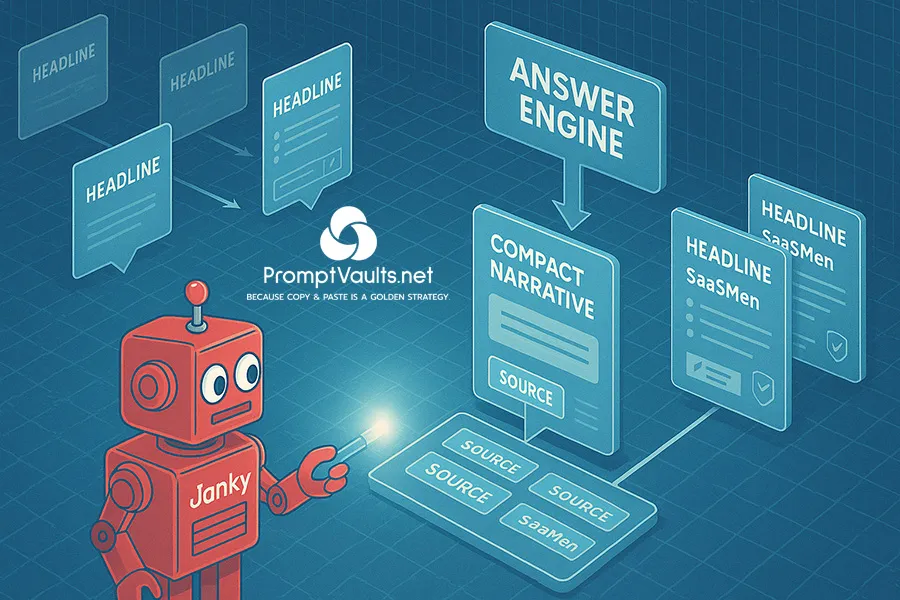
- Make your name the easiest label for a correct explanation.
- Use repeatable AI prompts that compress claims and mirror schema.
- Track summary presence, branded pairs, and coverage count to prove progress.
What changes when you add AI tools to BMO
Brand Memory Optimization turns your name into the easiest label for a correct explanation. When you add AI tools with intention, three things get easier. You find the right moments to repeat your claim, you structure content in a way that AI answers can lift without friction, and you monitor whether the brand appears inside summaries and suggested actions. The point is not to automate everything. The point is to reduce the friction between your editorial choices and the way generative engines assemble answers.
Think of your stack in three layers. Discovery, shaping, and verification. Discovery finds the questions and entities that already bring your brand to mind. Shaping converts raw materials into compact claims, glossary entries, and reference tables that are simple to cite. Verification checks if your name appears in summaries and whether follow up clicks grow over time. With a few small AI workflows in each layer, you will capture more traffic with less effort than a wide content push.
Discovery workflows you can run with minimal AI
Use AI tools to surface patterns you already influence. Keep the inputs small and the outputs simple. Your goal is to identify terms and question shapes that should carry your brand name whenever an answer appears.
Feed a list of your top product pages, support articles, and one or two competitor pages into a lightweight extractor. Ask the model to return two kinds of items. Questions that contain your name and questions where your claim is a natural answer even if your name is missing. This gives you a short backlog of opportunities where a clean sentence plus a proof link can place your brand inside an AI overview.
Keep the scope tight. Ten to twenty URLs at a time. Store the results in a simple spreadsheet with columns for page, question, claim, and proof link. You can move this list directly into your editorial queue without new software.
Ask a model to standardize the way you name products, categories, and core concepts. Give the tool a short seed list of names you already use. Ask it to map common synonyms back to your preferred labels. The output should be a one page glossary for internal use and a public glossary that explains each term in simple language. This improves both human recall and machine recall. Your pages become predictable training examples rather than noisy variants.
Generative answers favor simple next steps like Compare kits or Confirm fitment. Use an AI tool to mine similar phrases across your site and propose five that fit your buyer journey. Align these phrases across your templates. Use the same label in buttons, schema descriptions, and captions. These repeated phrases give AI systems safe actions to suggest and put your name near the suggestion.
| Intent | Where it appears | Anchor example |
|---|---|---|
| Compare | Category top, emails, PDF one pager | Compare kits |
| Confirm fitment | Product spec, support article | Confirm fitment |
| Product installation steps | FAQ block, schema how-to | See install steps |
| How much | Pricing sidebar, footer CTA | Request quote |
Shaping workflows that make your brand easy to cite
Shaping is where you convert findings into assets that AI summaries can lift without edits. Focus on claim density, structural consistency, and proof visibility. The model does not need to be large or exotic. You only need reliable text transformation.
Point an AI tool at each high value page and ask for a single sentence that captures the core value in plain language. Give the tool rules. Keep the sentence under twenty words. Include the brand name. Avoid buzzwords. Use an action verb. The result is your signature line. Place it near the top of the page, mirror it in the meta description, and reuse it in JSON LD description fields. Consistency across these placements increases the chance that the AI answer cites your page by name.
Create a repeatable block called How our system solves this. Ask a model to reduce your copy to three bullet points that match a stable pattern. Problem, mechanism, outcome. End the block with one follow up action label from your approved list. Generate the block for your top pages, then paste it in. The less variation you allow, the more your site looks like a library of clean examples that an answer can quote with minimal edits.
Give the tool a seed term and a short rule set. Define in fewer than thirty words. Use everyday words. End with a connecting sentence that links the term to your brand claim. Example. Load leveling is the process of keeping ride height stable as weight changes. Air Lift kits provide adjustable support so trucks tow level and steer predictably. Publish these as individual pages on clean slugs and link them from the top pages. These entries become reliable sources that reinforce your message inside summaries.
Ask the model to propose tidy column names for a single table you plan to own. Keep labels short and literal. Avoid marketing language in headers. Then ask the tool to generate a clean caption that includes your brand name and a one line description of the table’s purpose. Update this table on a stable URL. When others cite it, AI systems treat your page as a reference rather than just another opinion, which increases branded mentions inside summaries.
Use an AI tool to draft JSON LD for Article or Product that mirrors your one sentence claim and explainer bullets. The tool does not invent new facts. It pulls from your visible copy and preserves your preferred labels. This keeps the machine readable layer in sync with the human layer and avoids the kind of mismatch that erases memory. When you update a claim, re run the schema draft for that page and paste it in.
Give the model a list of your glossary entries and top pages. Ask it to suggest three internal links for each page using only your approved slugs. The goal is to connect claims, glossary, and reference tables in a small web that makes semantic sense. Use exact match anchors that reflect your stable labels. For internal references on your site, keep links in the format https://promptvaults.net/brand-memory-optimization-generative-search-local so your CMS can reuse the same pattern across modules.
Search engines and AI systems benefit when visible text and structured data match closely. Keep both layers aligned for reliable interpretation. - Google Developer Docs
- Claim density
- Visible, repeated phrasing that states your value in one short line.
- Proof link
- Near the claim, labeled clearly, and easy to parse in under five words.
- Stable label
- Consistent anchor and heading text used across pages and schema.
Verification workflows that confirm brand presence in answers
Verification closes the loop. You want proof that your name appears inside summaries and that follow up clicks grow. You can do this with light AI support and simple logs. Avoid complex dashboards at first. Look for directional movement and clear wins you can share with leadership.
Use an AI tool to simulate a user question and summarize the current top sources with short citations. Save a weekly snapshot of whether your brand name appears in the answer region or in the follow up suggestions. Keep each snapshot to a single page of notes. Your trend is the ratio of questions where your brand appears to the total set you track. If the ratio stalls, revisit claims and proof placement on the pages that matter most.
Extract query pairs from your analytics where your brand name appears next to a feature or a category. Examples include Air Lift compressor, Air Lift fitment, or Air Lift controller. Paste the pairs into a small script or spreadsheet that counts month over month changes. These pairs often grow faster than raw branded searches because they mirror the way AI answers add a next step. When these lines move up, your shaping work is paying off.
Create a small checklist for each key page. One sentence claim near the top. Proof link near the claim. Explainer block present. Schema mirrors claim. Three internal links to glossary or reference. Use an AI tool to scan pages and flag missing elements. Treat coverage as your primary leading indicator. The more pages that pass, the more likely your brand appears inside answers across topics.
Putting the workflows together in a 30 day plan
You can implement these steps in a single month even with a small team. Assign one person to own discovery and shaping. Assign one person to own verification. Keep all prompts and rules inside a shared doc so anyone can run the workflows without guesswork.
Run branded question mining on your top ten URLs. Finalize the entity and synonym map for categories and product lines. Approve five follow up intent phrases. Draft the one sentence claim for the brand and for three categories. Publish or update your public glossary page and a short index that lists all terms with clean links.
Generate compact explainer blocks for the top ten pages and paste them in under the headline. Add a proof link near each claim. Draft schema that mirrors the claim and explainer bullets. Choose one evergreen table to own and publish it at a clean slug with a direct caption that includes the brand name. Add three internal links per page, always to approved slugs.
Repeat the shaping steps for the next ten to fifteen URLs. Add two to three new glossary terms that answer high value questions discovered in week one. If you have a support guide that receives regular traffic, add the signature claim and a clean follow up action at the end. Use your AI tool to produce updated schema for these pages as you go.
Run your summary presence check across a fixed list of questions and save the snapshot. Check branded query pairs in analytics to see if the share of brand plus feature searches is rising. Audit coverage across all updated pages to confirm consistency. Adjust any pages where claims drifted or proof links are buried. Plan the next set of pages for the following month.
Prompt patterns that keep outputs consistent
Even light AI use benefits from stable prompts. Store these patterns in your CMS or your team playbook so anyone can run them. Keep each prompt short. Always feed the tool the approved labels and a sample that shows the desired tone. Ask for outputs that can be pasted without edits.
Input


Page headline plus two short paragraphs and the approved brand name

Rules
Max 20 words
Include brand name
Action verb
No jargon

Output
One sentence suitable for H1 adjacent placement and JSON-LD descriptionInput
A few features
A short user problem statement
One approved next action label
Output
Three bullets
* Problem
* Mechanism
* Outcome
Then the exact next action label as a single lineInput
Single term
Signature claim
Rules
Definition under 30 words with everyday language
One follow line that links the term to the claim
Output
Two sentence entry ready for a standalone slugInput
Final page copy with claim and explainer bullets
Output
Article or Product JSON-LD that mirrors visible wording and approved labels onlyInput
Current page title
List of approved slugs
Output
Three internal links with exact match anchors
* Near the claim
* Inside the explainer
* At the endDistribution tips that reinforce memory across surfaces
AI answers often reference repeatable structures that show up in multiple places. When you add light AI to your distribution habits, your claim and proof travel farther with less work. You do not need a new platform to see gains. You only need to press the same structures into channels you already use.
Use an AI tool to convert your on page explainer block into an email snippet with the same three bullets and the same next action label. Keep the copy nearly identical. This trains readers to expect the same pattern and it trains models to associate your brand with a compact explanation wherever the text appears.
Ask the tool to produce a one page PDF layout for a key term. Headline, definition in thirty words, three bullets for application, and a short proof graphic caption. Host the PDF at a clean URL. Link to it from the glossary page. Many communities save and cite PDFs, which becomes additional fuel for branded mentions.
Use your claim reducer and explainer composer patterns to write short forum answers that include your brand name and a proof link. Keep the tone neutral and useful. The goal is to show the same wording in spaces that AI crawls often. Even a few consistent entries in relevant threads can nudge summaries to adopt your phrasing.
Governance that keeps outputs clean
Light AI use does not mean loose quality control. Set a few guardrails so your brand remains consistent everywhere your text appears. Store them next to your prompts and insist that every run includes them.
- Approved labels for brand, products, and categories
- Reading level target with a simple test sentence
- Claim length and structure rules
- Proof link formatting with a preference for short captions
- Internal link targets and anchor conventions
- Schema fields that must mirror visible copy
When a workflow violates a rule, change the rule or change the workflow before publishing. Avoid quiet drift. Drifts compound and erase memory faster than any one mistake.
How to show progress without a complex dashboard
Leadership will ask for proof that the AI work creates value. Show a small set of indicators that tie directly to the goal of branded presence inside answers.
- Summary presence rate The share of tracked questions where your brand appears inside the AI answer region
- Branded pair growth Month over month change in query pairs that combine your brand with a feature, category, or claim phrase
- Coverage expansion The count of key pages that contain the complete BMO set of elements
- Reference page citations Mentions or links to your evergreen table or glossary entries from other sites
Put these numbers in a one page monthly memo. Include a short note on what changed in claims, glossary, or the reference table. The memo becomes institutional memory and reduces the urge to chase new tactics that do not align with BMO.
Common pitfalls when adding AI to BMO
Teams that adopt AI quickly often run into the same problems. They overproduce text that does not match the brand claim. They change labels to sound fresh. They bury proof links in long paragraphs. The fix is to keep your AI work narrow and repeatable. If a workflow does not make your brand easier to cite, do not run it.
- Do not let models invent new taglines. Use the approved one sentence claim
- Do not rename categories for style. Keep the stable labels that your glossary defines
- Do not accept schema that contradicts on page language. Regenerate from the final copy
- Do not produce long expert essays when a compact explainer will win the citation
- Do not rely on a single channel. Reuse the same structures in pages, emails, PDFs, and forums
Final guidance for teams that use AI minimally
Brand Memory Optimization thrives on clarity, consistency, and compactness. AI tools help you create these qualities at scale without new headcount or complex systems. Use AI for mining the right questions, reducing claims to clean sentences, composing uniform explainers, aligning schema with human copy, and checking whether summaries carry your name. Keep every workflow small and rules based. Publish slowly and steadily. Measure presence inside answers and growth in brand plus feature queries. Over a few cycles you will see your brand move from the background to the first sentence of the story.
If you want a place to start today, pick three pages. Run the claim reducer, explainer composer, and schema mirror for each. Add two internal links to glossary and one link to your reference table. Then check branded query pairs in thirty days. That simple pass is often enough to put your name inside the next round of AI answers.