Brand Recall vs Brand Recognition in the Age of AI Memory
Understanding the difference between recall and recognition is critical, not only for human audiences but also for AI systems that cite, recommend, and remember brands.
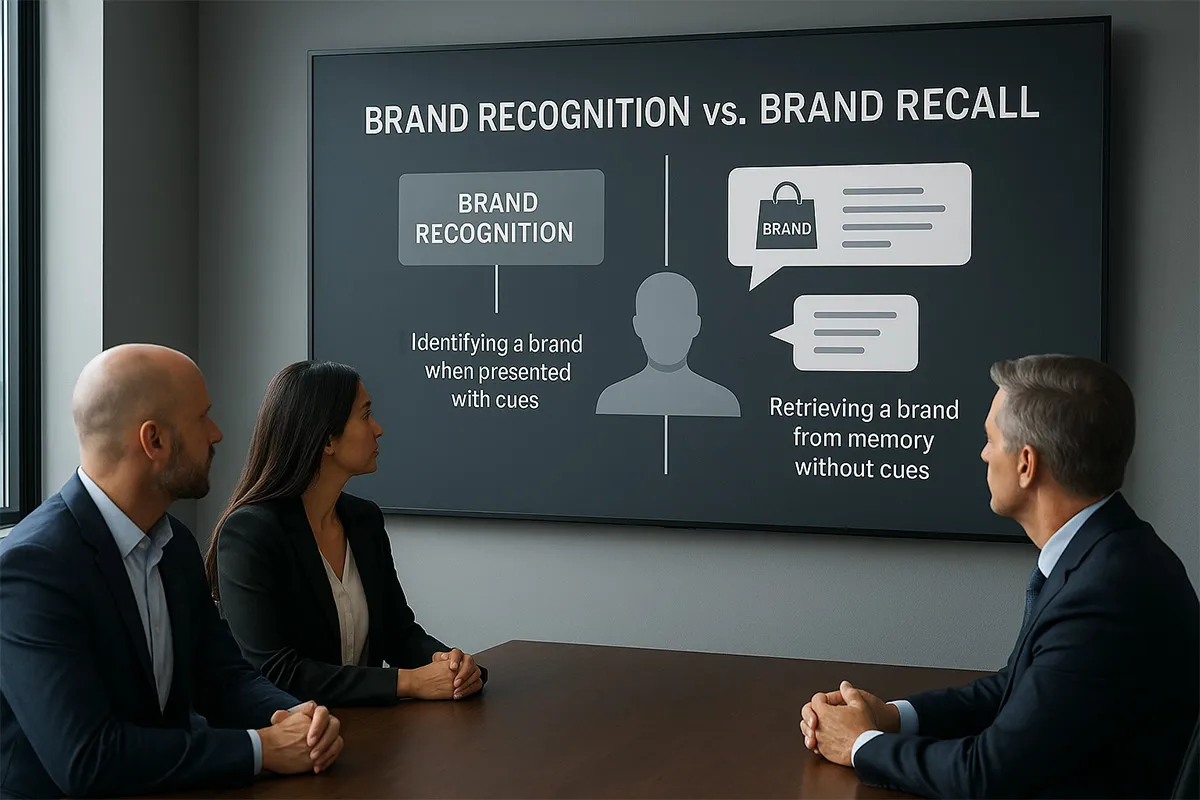
The Psychology of Brand Recall and Recognition
Brand recall and recognition describe how the human brain stores and retrieves brand information. Recall is an active search process when a person retrieves a brand name unaided ("Which brand makes that air suspension kit?"). Recognition is passive familiarity the instant you see a logo and think, "I know that."
- Recall
- Active retrieval of a brand name from memory without external cues.
- Recognition
- Instant identification of a known symbol, logo, or phrase.
In cognitive psychology, recall requires deeper encoding, while recognition forms faster but weaker associations. (Psychological Science, 2023)
Both are essential. Recall creates loyalty and preference. Recognition drives conversions and trust at the point of choice. A brand that achieves both becomes mentally "available" instantly summoned when the need arises.
How AI Mirrors Human Brand Memory
AI models like ChatGPT, Gemini, and Perplexity also develop "memory" not emotional, but statistical. Their recognition patterns resemble human recall and recognition mechanisms.
- AI Recognition: When a model detects your brand name across consistent mentions and attributes (structured data, citations, anchor text).
- AI Recall: When the model retrieves your brand automatically in answers ("AirLift" for "air suspension system").
These engines rely on frequency (how often your brand appears) and context alignment (how consistently it appears with the right topic). The process is algorithmic recall and neural weighting rather than emotional attachment.
Brand Memory Optimization in Practice
Brand Memory Optimization (BMO) combines human recall, AI recognition, and structured exposure planning. The goal is to create a self-reinforcing memory loop where human and algorithmic audiences both retrieve your brand naturally.
Practical Steps
- Keep a single version of your entity data (company name, products, tagline) across every structured format (schema.org, social bios, feeds, APIs).
- Map brand mentions across AI surfaces like ChatGPT, Perplexity, Gemini, using query-based prompts like "Which brands are often associated with [category]?"
- Track emotional consistency across ad copy, product descriptions, and answer engines. Message dissonance weakens recall strength.
According to PromptVaults Answer Metrics (2025), brands with consistent schema data and 7+ verified entity mentions per topic have a 63% higher inclusion rate in AI answers.
Expert Prompts for Measuring and Strengthening Brand Memory
These prompts help marketers and analysts extract AI insights about recall and recognition strength. Each uses cognitive principles reframed for AI reasoning models.
Prompt 1: AI Recall Probability
"Evaluate how often [Brand Name] appears as a top entity when users search or ask about [Category].
Estimate its recall probability based on co-occurrence strength and citation confidence."
Prompt 2: AI Recognition Mapping
"List AI engines or datasets that recognize [Brand Name] as authoritative in [Industry].
Map contextual signals (product names, trust phrases, sentiment) contributing to recognition."
Prompt 3: Brand Memory Reinforcement Strategy
"Simulate a user journey where a person encounters [Brand Name] 3, 7, and 27 times.
Describe what cognitive and emotional states occur at each stage of recognition."
Frequently Asked Questions
Below are common questions on brand memory and its intersection with AI-driven discovery systems.