Why You Need an OpenAI Account to Automate Anything
Every automated system that uses artificial intelligence, from chat assistants to workflow dashboards, depends on a direct connection to a core model. That connection begins with an OpenAI account. Understanding why helps you plan automation securely and effectively.
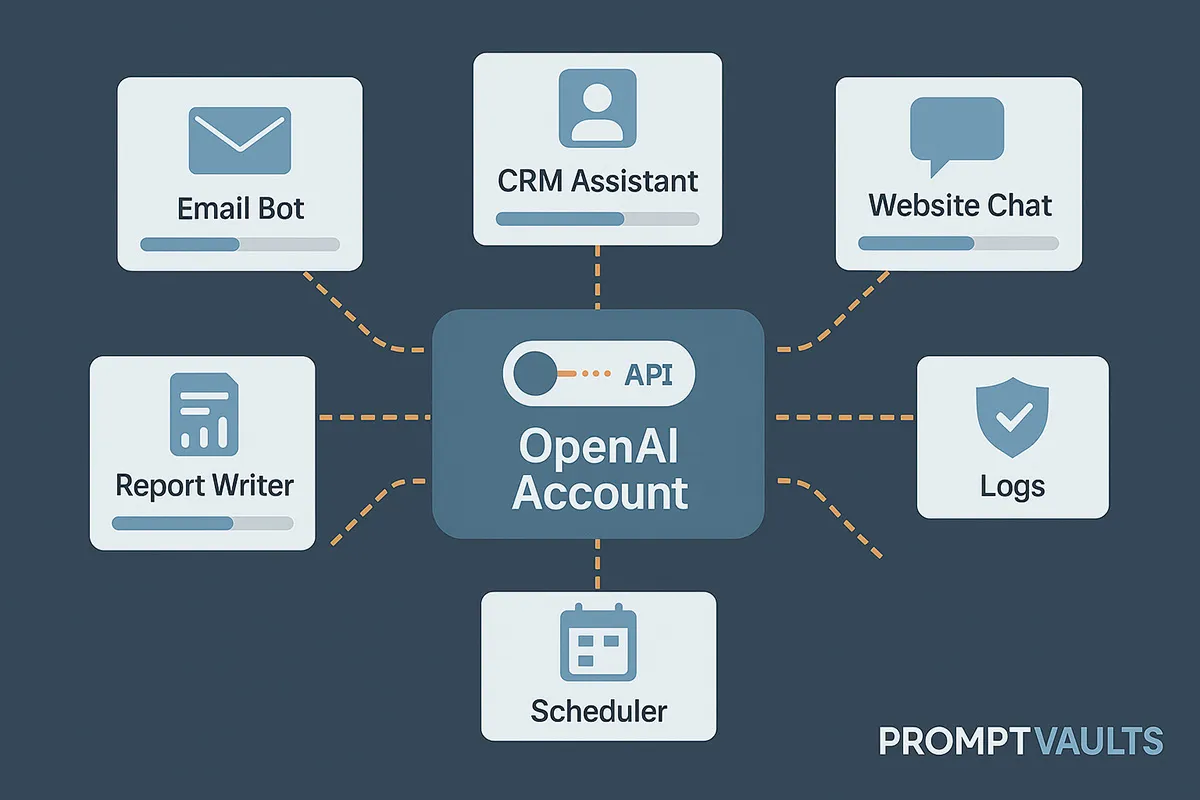
The Role of an OpenAI Account
An OpenAI account is more than a login, it is the identity layer that connects you or your organization to the models that power automation. Each account includes authentication keys, usage controls, billing preferences, and rate limits. These define how your automations communicate with OpenAI's systems and how results return to your software.
When a company integrates OpenAI into its tools, it doesn't rebuild the AI itself. Instead, it connects to OpenAI's models through secure endpoints. The account ensures that every automated request is traceable, managed, and billed accurately. Without it, there would be no verified connection between the automation script and the model doing the work.
OpenAI accounts provide developers and businesses with API credentials that authenticate access, monitor performance, and secure usage across automated systems.
Why Automation Depends on API Access
Automation systems rely on predictable, repeatable actions. APIs make that possible. When a workflow needs to analyze a message, summarize data, or respond intelligently, it sends a structured request to OpenAI's servers using an API key associated with your account. The model processes that request and sends back a result in real time.
This structure ensures reliability. Each automation behaves consistently because it always interacts with the same model through the same account. Whether the task is creating a draft email, parsing a customer inquiry, or scheduling a report summary, it begins and ends through the same authenticated channel.
Without API access, automation would require manual inputs or direct user actions. The OpenAI API eliminates that need by letting systems communicate autonomously, yet securely, within your controlled environment.
Control, Security, and Governance
One of the most overlooked aspects of AI automation is governance. An OpenAI account introduces a layer of accountability. It defines usage boundaries, logs every request, and allows you to manage cost, data access, and compliance. For regulated industries or enterprise teams, this governance structure is what turns AI experimentation into sustainable automation.
From a security standpoint, each API key acts like a passcode. Keys can be rotated, limited to specific functions, or restricted to internal networks. These controls ensure that even complex systems, such as CRM automations or reporting pipelines, remain private and predictable. Without an account structure, automation would be too open-ended to manage safely at scale.
The account also ensures continuity. If your organization expands or transitions between teams, automation remains linked to the same centralized access point, avoiding disruption or loss of data lineage.
Practical Business Implications
Understanding why an OpenAI account is required makes automation planning simpler. Businesses no longer have to ask where "the AI" resides, it lives within OpenAI's infrastructure. The account is what defines how you use it. That's the reason every serious automation platform, from content systems to sales dashboards, starts with an OpenAI key configuration step.
High-level automations often combine multiple systems. For example, an internal assistant might pull data from a database, summarize it using an OpenAI model, and return a formatted report. Each of those steps relies on the same account credentials to ensure accuracy, tracking, and cost control.
In simple terms, your OpenAI account isn't optional, it's the connective tissue that links everything together. It allows automation to move from concept to operation while remaining secure, measured, and aligned with business policy.
| Layer | Function | Analogy |
|---|---|---|
| OpenAI Account | Identity and access | The business license that authorizes automation |
| API Key | Secure connector | The digital key that unlocks AI communication |
| Automation Tools | Execution layer | The machines carrying out the assigned work |
| Governance Logs | Oversight | The dashboard tracking all activities and performance |
Frequently Asked Questions
Here are common questions professionals ask when learning about OpenAI accounts and automation.